Vaccination

Vaccines are products designed to trigger protective immune responses and prepare the immune system to fight future infections from disease-causing agents. Vaccines stimulate the immune system’s production of antibodies that identify and destroy disease-causing organisms that enter the body. They provide immunity against one or several diseases that can lessen the severity or prevent certain diseases altogether.

Why is it important to Vaccinate Pets?

Vaccinations protect your pet from highly contagious and deadly diseases and improve your pet’s overall quality of life.

Why do Puppies and Kittens Require a Series of Vaccinations?

Very young animals are highly susceptible to infectious disease because their immune system is not yet fully mature. They receive protection through antibodies in their mother’s milk, but the protection is not long-lasting and there may be gaps in protection as the milk antibodies decrease and their immune system is still maturing.

In many instances, the first dose of a vaccine serves to prime the animal’s immune system against the virus or bacteria while subsequent doses help further stimulate the immune system to produce the important antibodies needed to protect an animal from diseases.

To provide optimal protection against disease in the first few months of life, a series of vaccinations are scheduled, usually 3-4 weeks apart. For most puppies and kittens, the final vaccination in the series is administered at about 4 months of age; however, a veterinarian may alter the schedule based on an individual animal’s risk factors.
Canine Vaccines

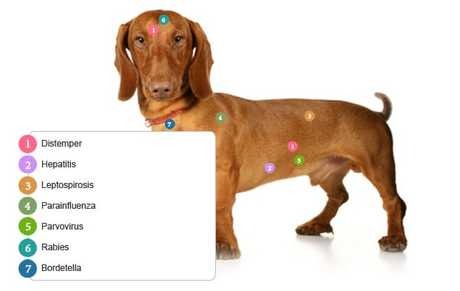
DHLPP:

  • Distemper: A very contagious and often fatal disease of the respiratory tract, gastrointestinal tract and nervous system. Transmission is by direct contact with bodily secretions and by movement of airborne secretions. Puppies at highest risk but dogs of all ages especially with inadequate vaccination are susceptible.
  • Hepatitis: Infectious canine hepatitis is a highly contagious viral infection that affects the liver, kidneys, spleen, lungs, and eyes in dogs.  It mostly affects young dogs under one year of age, though it can affect adults.
  • Leptospirosis: Is a serious bacterial disease of dogs, multiple animal species, and humans. In recent years, leptospirosis has become an increasing concern of pet owners and veterinarians, especially in cities and suburbs. The primary reason is growing populations of wildlife, like raccoons and skunks, which carry disease and infect dogs indirectly. Dogs can get sick even if they never come into direct contact with infected animals. All breeds and sizes of dogs are at risk. Lepto can be a very serious disease and can be fatal if not diagnosed and treated early. It generally attacks a dog’s liver and kidneys and can lead to organ damage or failure. However, if lepto is caught early, it responds well to antibiotics. ​
  • Parainfluenza: A common and highly contagious cause of infectious tracheobronchitis. Airborne transmission. Dogs of all ages are susceptible, unvaccinated or inadequately vaccinated dogs at highest risk.
  • ​​​Parvovirus: A highly contagious, very aggressive and sometimes rapidly fatal gastrointestinal virus. Transmission is by direct contact with infected animals, feces and objects containing virus particles. Virus can survive in the environment for a very long time and can spread easily from contaminated surfaces. All unvaccinated or inadequately vaccinated dogs are susceptible, v​ery young, sick or weak dogs at highest risk of death.​​
  • Bordetella: Is a contagious disease that can cause your dog to cough for up to three weeks. Bordetella causes a hacking, dry cough, but it is rarely life threatening. Nevertheless, it can cause your dog quite a lot of discomfort.
  • Canine Influenza: Also known as dog flu, canine influenza is highly contagious virus that occurs year-round and can affect dogs of any breed, age, sex, or health status.  Almost all dogs exposed to the virus become infected, and the majority develop flu-like illness.  Symptoms range from mild to severe: persistent coughing, sneezing, nasal or eye discharge, lethargy, reduced appetite and fever.  Secondary bacterial infection can develop and may cause more severe illness and pneumonia.
  • Rabies: Is a virus that may affect the brain and spinal cord of all mammals, including dogs, cats and humans.  There is no treatment for rabi​es.  Once symptoms appear, the disease results in fatality.

Feline Vaccines

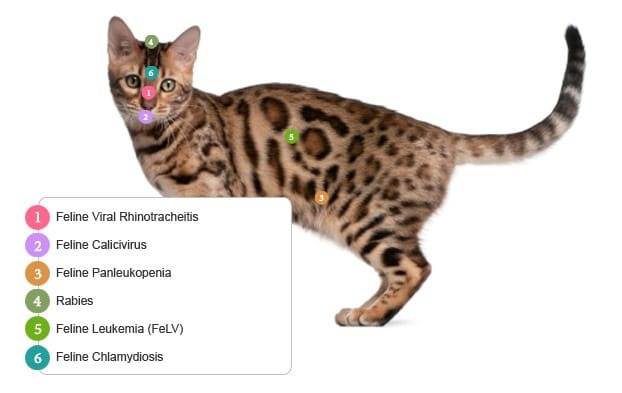
  • FVRCP:
    • Feline Viral Rhinotracheitis: This virus is an extremely common cause of respiratory disease and often results in chronic, often life-long, infection with intermittent recurrences causing respiratory and sometimes eye disease. It is spread easily through airborne respiratory secretions and direct contact with a carrier cat or contaminated objects. Unvaccinated cats are most susceptible as well as the very young and the very old.
    • Calicivirus: A common viral infectious respiratory disease, can also cause mouth sores resulting in severe oral pain. Spread by direct contact with an infected cat or by contact with contaminated objects. The virus is very resistant to disinfectants and persists in the environment. Unvaccinated and inadequately vaccinated cats of all ages are at risk.
    • Panleukopenia: A severe, highly infectious and sometimes fatal disease of the gastrointestinal tract, the immune system and the nervous system. The disease is named for the characteristic severe decrease in white blood cells, the body’s defense against disease. The virus is very persistent in the environment. This virus spreads by direct contact with infected cats or by contact with viral particles in the environment. Unvaccinated and inadequately vaccinated cats of all ages are at risk.
  • FeLV:
    • Feline Leukemia: Is a disease that impairs the cat’s immune system and causes certain types of cancer.
  • Rabies: Is a virus that may affect the brain and spinal cord of all mammals, including dogs, cats and humans. There is no treatment for rabies.  Once symptoms appear, the disease results in a fatality.
Working Hours
Mon - Fri:
7:30 am – 5 pm
Saturday:
8 – 12pm
Sunday:
Closed
*We are closed weekdays for lunch from 1pm – 2pm
Saturdays and Holidays: Hours may vary. For up-to-date hours, please check HERE.
©2026 Rowan Animal Clinic