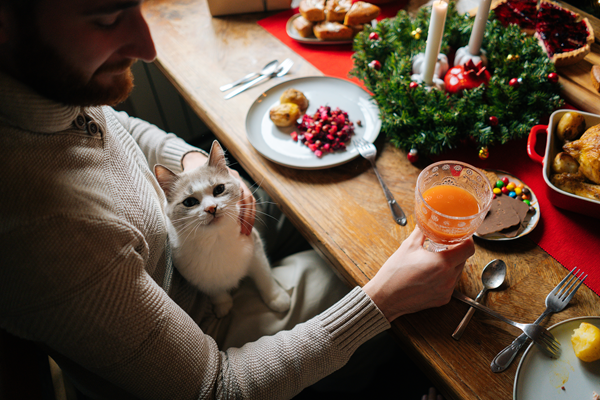
Holiday parties turn even the calmest pets into snack-seeking missiles. Before someone drops a cookie or a dog snatches something off the counter, here’s a brief cheat sheet of foods that seem fun but really aren’t for dogs and cats.
Brown, shiny, and delicious – for humans. For pets? Instant trouble. Dark chocolate is extra dangerous. Think: hyperactivity, tremors, seizures, and emergency vet visits. Just don’t do it!
It’s in fruitcake, cookies, stuffing, charcuterie boards – basically everywhere except where pets should find them. Even one raisin can cause kidney issues in some dogs.
Xylitol hides in sugar-free gum, candies, peanut butter, some essential oils, holiday baked goods, and much more. Dogs can quickly go from “I found a treat!” to a dangerous blood-sugar crash and even liver failure. Cats don’t usually seek it out – but don’t test that theory.
Eggnog, mulled wine, rum balls: A few licks can cause wobbly legs, vomiting, or worse. Cute? Maybe for one second. Safe? Absolutely not.
Onions and garlic show up in gravy, stuffing, marinades, dips – basically every good dish. All forms (powder counts!) can damage red blood cells. Cats are extra sensitive. Keep these tasty flavors for the humans.
Turkey, ham, roast: the bones look like gifts, but they break into sharp shards or break pets’ teeth. Choking or internal injuries aren’t a festive surprise anyone wants.
Turkey skin, drippings, cheese boards, creamy casseroles: Pets love them, but their pancreas does not. Pancreatitis can cause vomiting, abdominal pain, dehydration, and at least one vet visit if not several days in the hospital.
Macadamia nuts are toxic to dogs and known to cause weakness and tremors. Plus, nuts in general are choking hazards. Dogs are not known for careful chewing.
Safe treats can include plain turkey or chicken (no skin, no bones), plain pumpkin, or pet treats shaped like tiny gingerbread people: cute and safe.
If a pet eats any of the no-go goodies, call your vet quickly. Holiday miracles are great, but prevention is better.
Check out the Pet Poison Helpline for more information on dangerous foods.