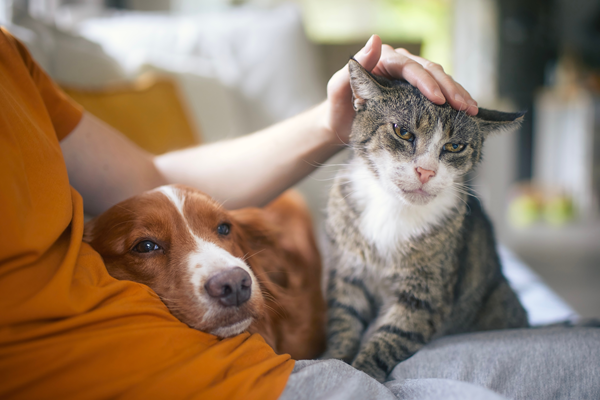
November is Senior Pet Month – a time to celebrate how amazing our senior pets are and the joy and comfort they provide. It’s easy to write off any changes as “they’re just getting older,” but age isn’t a disease. These differences you see are subtle cues that their body is changing.
And our pets don’t complain. They still eat, play, and purr like there is nothing to worry about, even when they are hiding illness that you can help them with.
That’s why senior wellness testing is so important. It’s a powerful tool you can use to catch and address problems early, potentially even extending your pet’s life.
Senior wellness testing may include some or all these tests:
Together, these tests take your pet’s wellness exam further, giving you and your vet more information about your pet’s internal health – something a physical exam alone can’t provide.
Even if results all come back normal, there is still value in testing. Establishing a baseline while your pet is healthy gives your veterinarian a reference point for comparison later. Subtle changes between annual visits – tiny shifts in kidney enzymes, for instance – can reveal the earliest stages of disease long before your pet shows signs of disease.
Pets whose lab results are monitored consistently over time have a significantly higher likelihood of surviving age-related illnesses. Early intervention not only improves quality of life but, in many cases, even prolongs their life.
In senior dogs and cats, chronic conditions like kidney disease, thyroid imbalance, diabetes, or liver dysfunction develop gradually. Caught late, they often require expensive treatment. Caught early, they can often be managed with diet changes, medications, or simple lifestyle adjustments, allowing pets to live comfortably well into their senior years.
For example:
These are the kinds of problems that wellness panels routinely catch before a pet seems sick. In a 2023 review of senior wellness panels, 60% of senior cats and 40% of senior dogs had clinically significant changes in their lab work.
Veterinarians generally recommend annual wellness testing for all pets. For seniors (those over seven years for dogs and cats, or even earlier for certain breeds), semi-annual testing may be ideal.
Senior wellness testing doesn’t just protect your pet – it protects you from the heartbreak of discovering too late that you missed something easily detectable.
Knowing more about your pet’s health lets you make more informed choices: when to adjust the diet or start supplements or medications. It’s about giving your pet the best possible quality of life, and yourself the peace of mind that you’re doing everything you can.
Preventive testing saves lives. Early detection means earlier treatment, and earlier treatment often means longer, healthier years with your pet. Because when it comes to senior pets, time is precious. And sometimes, a simple blood test is what gives you more of it.
So even if your gray-muzzled dog is still bounding up the stairs or your old cat rules the household with quiet authority, don’t skip the lab work. Wellness testing isn’t about finding bad news – it’s about ensuring good years ahead.