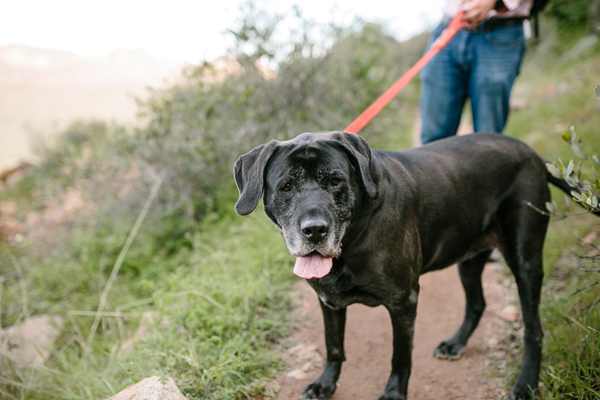
For many, November means chilly mornings and early sunsets, and with it comes Senior Pet Month – a reminder to look a little closer at the older animals in our care. As cooler weather approaches, dogs may hesitate before rising, or cats may spend more time on the floor instead of their favorite perch.
Somewhere along the way, many people start to think slowing down is simply “what old pets do.” But the slow-down isn’t age itself. It’s often pain and stiffness as osteoarthritis (OA) develops in joints that once moved easily. When it comes to OA, movement is still one of the most powerful, accessible forms of medicine available.
One in five dogs will be diagnosed OA in their lifetime. And cats – those masters of hiding discomfort – experience degenerative joint disease at rates estimated between 40% and 92%. These pets carry around daily pain we mistake for “just getting older.”
OA creates a downward spiral if left unaddressed: stiffness leads to less movement, less movement leads to muscle loss, muscle loss leads to more joint stress and more pain, causing more stiffness, and the spiral continues.
But this isn’t a hopeless picture. Because once you reintroduce gentle, consistent, intentional movement, the spiral can slow or reverse.
Controlled exercise supports the body exactly where arthritis weakens it.
For dogs with OA, movement:
Cats benefit too, in their own feline way. Since cats are sprinters by nature, their joints thrive on short bursts of activity. Encouraging even brief play helps increase energy expenditure and counters the weight gain that worsens joint pain.
The core idea is simple: movement keeps joints nourished, muscles active, and pets emotionally engaged with their world.
Let’s start with dogs, because they tend to wear their pain more visibly.
If a dog hasn’t had regular exercise or seems stiff, the recommendation is to begin with short, frequent walks – about 10 minutes, three times a day. This movement reduces the stiffening that occurs during long rest periods. As long as stiffness doesn’t increase, you can gently scale up, week by week.
High-impact activities like ball throwing, frisbees, or anything that involves abrupt stops are risky for arthritic joints. These motions involve extreme muscle exertion at take-off, twisting, and high-speed impact, which can trigger severe pain.
If the game is non-negotiable for your dog’s soul, the guidelines are clear:
Rehabilitation practitioners can design individualized treatment plans and track progress, adjusting exercises if a dog isn’t improving. For senior dogs, rehab has even been shown to support cognitive health – a gift no medication alone can offer.
Cats are… cats. You can’t tell them to take a 10-minute walk three times a day. But you can set up their world so they move more without noticing.
Even for overweight cats who struggle with play, feeding-time movement – puzzle feeders, climbing for access – can be the therapeutic doorway into increased activity.
Dogs and cats don’t slow down just because they get old. They slow down because a medical condition – often joint pain – makes movement uncomfortable. When you add movement back into a dog or cat’s routine (carefully), you give them back part of their life.
Movement doesn’t just extend a pet’s life; it also improves the life they’re living.
Senior dogs and cats may not leap the way they used to, but their bodies are built for movement. With a thoughtful plan, the right pacing, and a sprinkle of creativity, you can help them stay active, comfortable, and connected to the world around them.
Their joints will thank you. Their hearts will too.